


Health and Wellbeing
Wobblier than you used to be? Here's how to improve your balance in old age


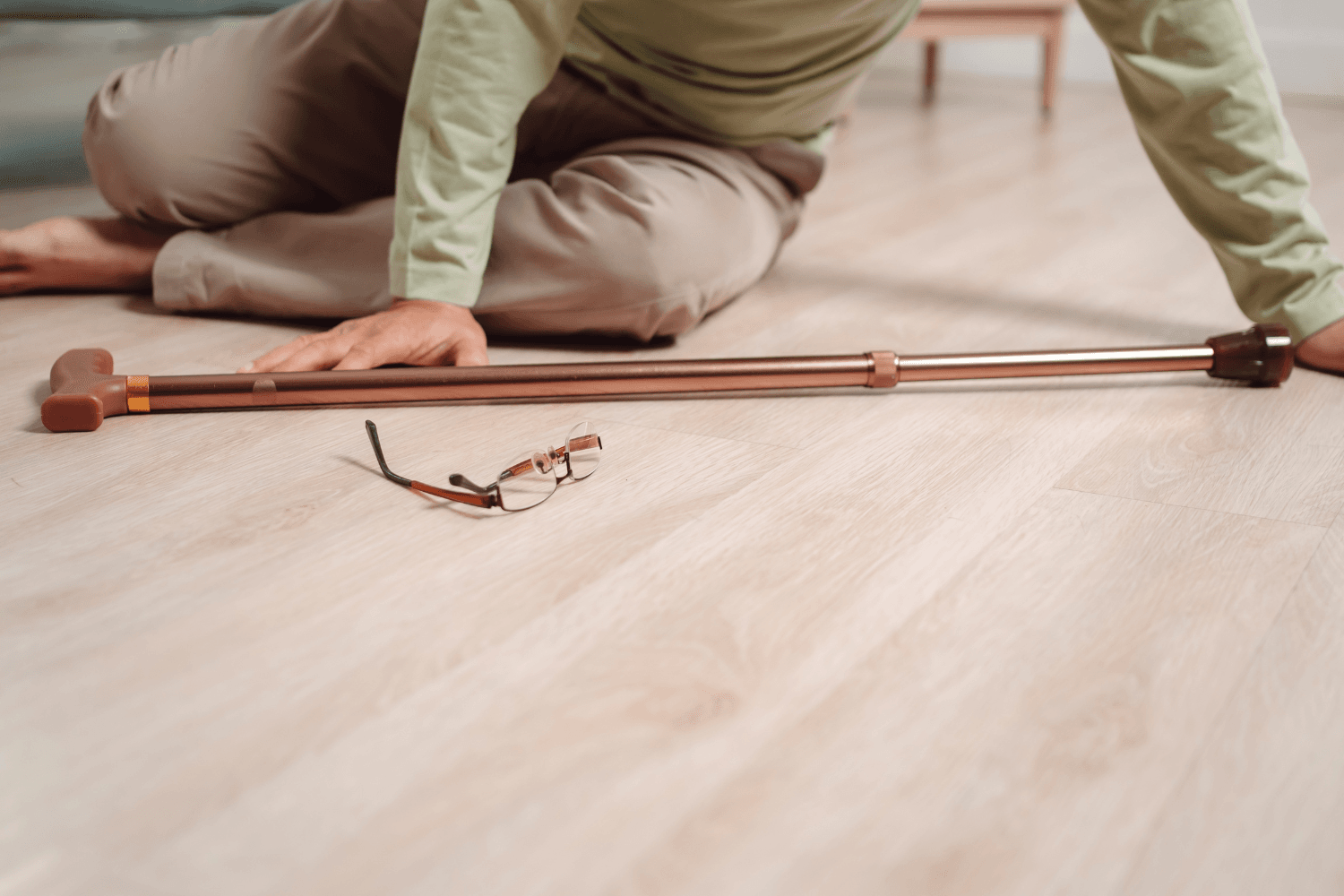
Ever reached up to a high shelf, or turned around a bit too quickly, and felt that little lurch - the one where your body catches itself just in time? It happens to almost everyone as the years go on, and it can be unsettling the first few times.
But balance isn't simply something you lose with age and have to accept. It's a system - and like most systems in the body, it responds to training. So we've pulled together what fall-prevention researchers and specialist physiotherapists recommend for improving balance as you age. Here’s how to better your balance from the comforts of home.
Key takeaways:
- Balance decline isn't just ‘one of those things’ that happens with age - it's largely down to changes in muscle strength, vision and the inner ear, and much of it can be trained.
- A study by Tufts School of Medicine found that nearly 8,000 older adults found that balance and functional exercises can cut the rate of falls by 24%.
- Simple, low-cost exercises, such as standing balance drills, Tai Chi, and gentle strength work, have been shown to help, even for adults over 80.
- Your environment matters as much as your body. How you walk, sit and stand up is shaped by the furniture around you, not just your fitness.
- If you're stumbling more often, feeling dizzy or avoiding certain movements out of fear of falling, it's worth mentioning to your GP or a physiotherapist.

Why does balance get harder as we get older?
Balance relies on three things working together - your muscles, your vision, and your inner ear. This is called the vestibular system. However, as we age, all three can quietly change.
Evan Papa, a physical therapist and associate professor at Tufts University School of Medicine who has spent much of his career researching why older adults fall, points to muscle strength as one of the biggest factors. As he puts it, ageing naturally brings a loss of strength and flexibility, and this combination - weaker muscles and poorer balance - is one of the most common causes of falls.
Vision plays a bigger role than most people realise, too. According to Lou Ezrick, a physical therapist who specialises in balance training for older adults, vision supplies around 70% of the sensory information your brain uses to stay upright - and by age 70, most people have lost roughly 40% of the sensory hair cells in the inner ear system responsible for detecting movement and position.
Put those together, and it's easy to see why a slightly dim room or an uneven pavement can suddenly feel trickier to navigate than it used to.
None of this means balance is a lost cause - quite the opposite. It means there are several different angles to work on, not just one.

Does balance training actually make a difference?
Yes, it does. The evidence here is strong.
Papa cites a large-scale review of research involving almost 8,000 older adults, which found that balance and functional exercises reduced the rate of falls by 24%.
Tai Chi has shown similarly impressive results, with several combined studies pointing to a 20% reduction in the number of people who experience a fall.
It's also never too late to start working on your balance. Research reviewed by physiotherapy provider Ivy Rehab points to studies (Granacher et al., 2015) showing that consistent balance exercises improved gait, posture and stability - even in adults over 80.
Exercises for boosting balance worth trying at home
These are simple enough to build into everyday life, but do them near a sturdy chair, countertop or wall you can reach out to if needed - especially to begin with.
Standing balance basics. Start with feet shoulder-width apart, then bring them closer together and eventually try standing heel-to-toe (one foot directly in front of the other), holding onto support if you need it.

Single-leg stands. Lift one foot slightly off the ground and hold, working up gradually. Research summarised by HSS has found that older adults able to balance on one leg for 30 seconds are considerably less likely to experience a fall than those who can't - not a target to stress over, just a helpful sense of what ‘good’ looks like to work towards.
Tai Chi or gentle yoga-style poses. Given the results mentioned above, Tai Chi is one of the best-evidenced options out there. If a class isn't accessible, simple, slow poses like ‘mountain’ (standing tall, weight evenly distributed) or ‘tree’ (one foot resting against the opposite calf or ankle, holding support if needed) borrow the same principles. See more: Chair exercises you can do at home to maintain mobility.
Weight shifts and marches. Standing or seated, shift your weight gently from side to side, or lift your knees one at a time in a slow march. This builds the same coordination skills used in everyday walking, without needing to actually walk anywhere.
Strength work for the legs and core. Papa's own research has found that strength training can improve walking speed and reduce fall risk - so exercises like sit-to-stands from a chair pull double duty for balance and strength together.
As with any new exercise routine, it's worth checking with a GP or physiotherapist first. Particularly if you have any existing joint pain, dizziness or a health condition that affects movement.
What about balance when walking?
Standing balance and walking balance aren't quite the same skill, so it's worth training both.
A few small adjustments can make a real difference. This can include:
- Taking slightly wider steps rather than a narrow, tightrope-style stride.
- Keeping your gaze up and ahead rather than down at your feet, which helps your brain plan for what's coming.
- Wearing supportive, well-fitted shoes rather than slippers or socks, which reduces the sensory feedback your feet rely on.
It's also worth assessing your environment. Loose rugs, poor lighting, cluttered walkways, and trailing cables are cited by researchers as everyday hazards that quietly increase fall risk - often more than people realise until they're pointed out.
Read more: An occupational therapist's guide to fall prevention.
Your furniture is part of your balance training, too
Here's something that doesn't get talked about enough: a lot of ‘wobbly moments’ aren't really about balance at all - they're about furniture that fights against you. A chair that's too low or too soft forces you to rock and heave to get up, throwing your balance right at the moment you're least prepared for it. A bed that's difficult to get in and out of creates exactly the same problem, often at night, in the dark, when the risk of a stumble is highest.
Well-designed, supportive seating (like recliner armchairs) and adjustable beds don't replace balance training - but they remove some of the daily moments where your balance is put under unnecessary strain, which is exactly the kind of small, practical change that adds up over time.

When it's worth getting extra support
Everyone finds their balance less reliable now and then, but it's worth mentioning to your GP or asking for a referral to a physiotherapist if you notice:
- Frequent stumbles or near-falls, even if you catch yourself each time.
- Dizziness, particularly when standing up quickly.
- Avoiding certain movements (like reaching up or turning around) out of fear of losing your balance.
- Any recent fall, however minor it seemed at the time.
Certain medications commonly prescribed to older adults - including sedatives and some blood pressure treatments - can also affect balance as a side effect, so it's always worth a medication review alongside anything else.
FAQs: Improving balance later in life
How can I improve my balance in old age without going to a gym?
Most of the exercises above - single-leg stands, weight shifts, tai chi-inspired poses - can be done safely at home near a sturdy chair or countertop, with no equipment needed.
How often should I be doing balance exercises?
Guidance from the World Health Organization, cited by HSS, recommends activities that challenge balance and mobility at least three days a week.
Is it too late to improve my balance if I'm already in my 80s?
Research suggests otherwise, as studies have found measurable improvements in gait, posture and stability even in adults over 80, so it's genuinely never too late to start.
What's the difference between balance and coordination exercises?
They overlap a great deal. Balance is about staying steady in one position or through a movement. Coordination is about your muscles and senses working together smoothly. Most of the exercises above train both at once.
Should I see a doctor before starting?
If you have joint pain, dizziness, a diagnosed health condition, or you've fallen recently, it's sensible to check with your GP or a physiotherapist first so any routine can be tailored safely to you.
See also…
- Preventing falls for the elderly with mobility aids
- What recliner chair accessories can help with comfort?
- How to prevent back pain in old age
- The best rise and recline chairs for disabled people
Sources and references
- Exercise Can Help Decrease Fall Risk for Elderly People - Tufts School of Medicine
- Sherrington C, Fairhall NJ, Wallbank GK, Tiedemann A, Michaleff ZA, Howard K, Clemson L, Hopewell S, Lamb SE. Exercise for preventing falls in older people living in the community. Cochrane Database of Systematic Reviews, 2019, Issue 1, Art. No. CD012424.
- Balance Exercises for Seniors - Ivory Rehab
- The Best Balance Exercises to Do As You Age - HSS