


Health and Wellbeing
What is a transfer board, and how does it work?
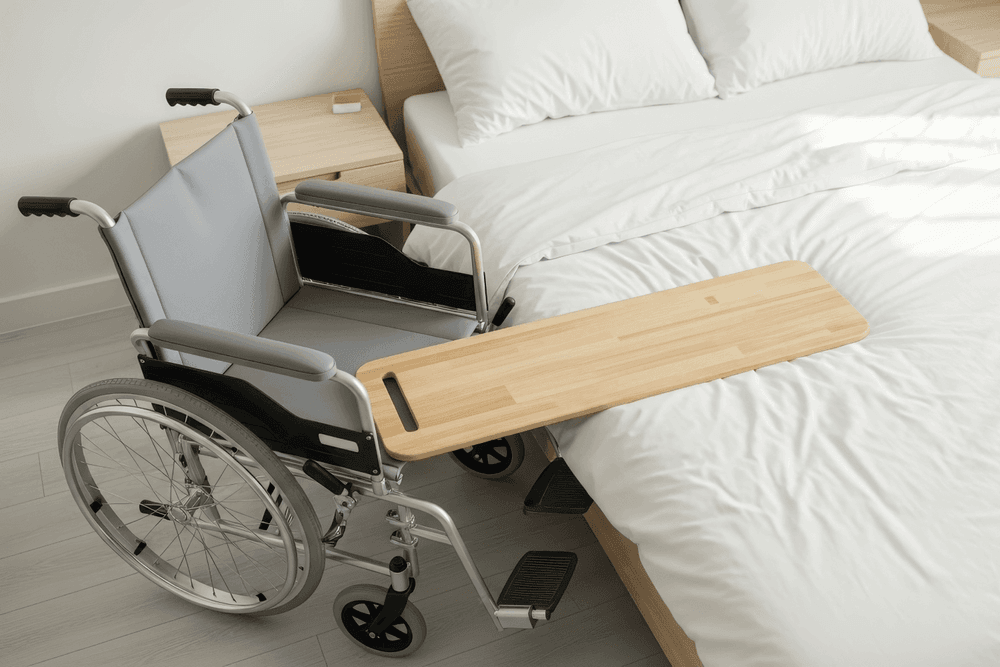
Having difficulty getting around? A transfer board enables you to move or ‘transfer’ from one surface to another. It is commonly used by wheelchair users, acting as a bridge from the chair to a new seated position.
Using one can help users maintain their independence and dignity and make it easier for caregivers or healthcare professionals to transfer someone between surfaces.
Find out what a transfer board is, the benefits of using one, and how it can positively impact your everyday life.
Key takeaways:
- Transfer boards help users move safely, efficiently, and independently between surfaces.
- There are different types of transfer boards for various needs.
- Choosing the right board depends on size, weight capacity, grip, and user strength.

What is a transfer board?
A transfer board is a strong, slip-resistant piece of wood or plastic. The board can vary in shape and size, but it’s designed to be flat and rigid, making it more comfortable to move from one surface to another.
Who are they for?
Transfer boards are primarily used for wheelchair users, disabled people, the elderly, and people who struggle to stand without assistance.
They allow the individual to move safely and more comfortably between surfaces, without needing to be fully lifted by a caregiver or healthcare professional.
When to use a mobility transfer board
A mobility transfer board can be used in many ways. It is commonly used at home to assist individuals with daily activities such as getting in and out of bed and bathing.
Transferring with a transfer board from wheelchair to car
Wheelchair transfer boards are particularly useful when moving onto a car seat. Before using, park the car in a spacious area with the wheelchair locked and parallel to the seat.
Transferring to and from a bed
Using a transfer board is one of the easiest and safest ways to get into a wheelchair from a bed.
The use of an adjustable bed can also help, allowing you to get into the optimal position for moving to and from a wheelchair.
Transferring to a toilet or bath
A commode transfer board is a moisture-proof board designed to connect the wheelchair to the toilet, helping to maintain dignity and mobility during personal care tasks.
Bath transfer boards can also make bathing more accessible – position the chair in front of the tub, and move across the board, then into the bath with more support.
Our bath lifts can also make bathing itself easier and more comfortable. They are designed to lower you slowly into the tub for an immersive, full-depth bathing experience.
“Oak Tree Mobility products are geared to enable ease and comfort and to open up choice and possibilities – allowing someone to sink safely and easily into a nourishing, sleep-inducing bath.” – Dr Nerina Ramlakhan, Sleep Expert
The benefits of using a transfer board
- Reduces the strain on the caregivers when lifting individuals
- Helps transfer board users move independently with limited support
- Increases safety by preventing the risk of falls and accidents
- Lightweight and portable – making a transfer board ideal for travel.
The use of mobility aids, such as a transfer board, can greatly impact your life, making daily tasks easier and more comfortable.
Explore Oak Tree Mobility’s range of mobility aids, including adjustable beds, bath lifts, and rise & recliners, designed to support safe, independent living at home.
Types of transfer boards
Straight
A straight transfer board is best suited for simple transfers. They can be made from wood or plastic and often feature built-in handles for extra grip.
Curved
Transfer boards that are curved (or in a ‘banana’ shape) can be used to move around obstacles or in tighter spaces, such as next to a toilet or near furniture.
Folding
Available in both straight and curved shapes, a folding transfer board is practical for storing in small spaces and during transportation.
How to choose a transfer board
- Length and width: Getting the right size is important to reduce the risk of injury for the user and caregiver.
- Weight capacity: Transfer boards can accommodate a wide range of individuals, but it’s best to check the specific model’s weight capacity.
- Surface grip: If more grip is required, opt for a transfer board with handles.
- Portability: If travelling with a transfer board, a foldable option may be better than a rigid one.
- User strength: Transfer boards are best suited to those with some level of upper-body strength.
How to use a transfer board step-by-step
- Position the board securely between the two surfaces.
- Ensure the wheelchair’s brakes are applied, and the armrests are removed.
- Sit upright and place your hands on the transfer board for support.
- Slide gradually across the transfer board in small movements.
- Once stable on the new surface, the board can be safely removed.
Note: It’s important to use the transfer board correctly, as improper use can increase the risk of accidents and injury.
Tips for supporting elderly people at home
At Oak Tree Mobility, we believe mobility shouldn’t hold you back from life.
From moving around easily with a transfer board to recharging after a long day in a supported chair, your comfort should always be a priority.
Request a free brochure to see how we can help you at home with our made-to-fit furniture.
FAQs about transfer boards for the elderly and disabled people
What is a transfer board used for?
A transfer board is used to move an individual who has difficulty with standing from one surface to another.
What is another name for a transfer board?
A transfer board can also be referred to as a ‘sliding board’ or ‘slide board’.
Can you use a transfer board by yourself?
Yes, you can use a transfer board yourself. However, you must have sufficient upper-body strength to do so.
What is the first step for using a transfer board?
The first step when using a transfer board is to safely secure it between the two surfaces, such as a wheelchair and a bed.
Can you use a slide sheet with a transfer board?
Using a slide sheet with a transfer board makes the transfer process smoother by reducing natural friction between the user’s body and the board.
How long should a transfer board be?
Lengths can vary for a transfer board. However, it must comfortably bridge the gap between the two surfaces for a safe transfer.
How does a transfer board work?
Position the board securely between the two surfaces and ensure the wheelchair's brakes are applied. The user must then sit upright, place their hands on the board, and slide across. Once stable on the new surface, the board can be removed.
Are transfer boards safe?
When used correctly, transfer boards are a safe and easy way to move between surfaces.
Sources and references
- https://www.physio-pedia.com/Transfer_Board
- https://www.evelinalondon.nhs.uk/resources/patient-information/transfer-board-user-guide.pdf
- https://www.nhs.uk/social-care-and-support/practical-tips-if-you-care-for-someone/how-to-move-lift-and-handle-someone-else/
- https://www.uniquecare.co.uk/transfer-board-bed-to-wheelchair/