



Health and Wellbeing
What is a transit wheelchair? Making everyday life easier

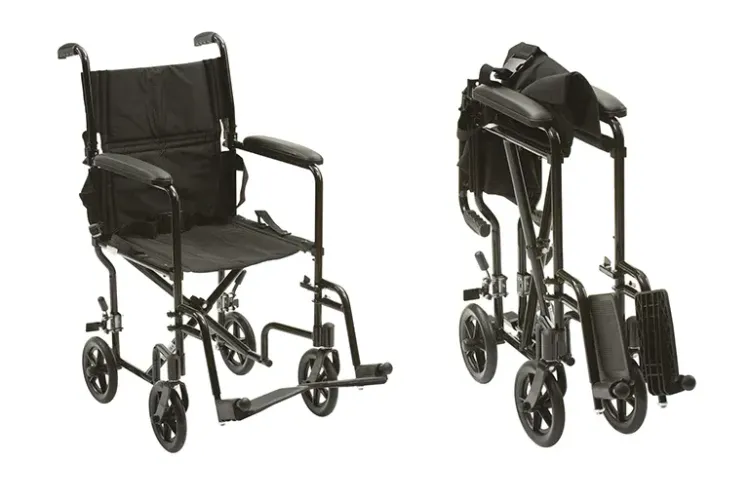
At Oak Tree Mobility, we believe mobility shouldn’t get in the way of living your life. We offer a variety of at-home mobility aids, but if you also have difficulty getting around outdoors, there are many options available – like a transit wheelchair.
Portable, durable, and lightweight, a transit wheelchair can help you get around more easily, making life a little more comfortable.
Key takeaways:
- A transit wheelchair helps with travelling for short distances and is best suited to those with limited upper-body mobility.
- They are designed to be pushed by an attendant or caregiver and can’t be used by the wheelchair user themselves.
- Choosing the right wheelchair depends on a range of factors, and it’s important to consider your specific needs before deciding.

What is a transit wheelchair?
Transit wheelchairs are foldable, lightweight mobility aids that can easily transport people with limited mobility from one location to another.
What is a transit wheelchair used for?
A transit wheelchair helps transport someone with mobility issues for short periods, such as for shopping, going to the GP or frequent travel. They are designed to be pushed by a caregiver, as the rear wheels are too small to be self-propelling.
Who should use a transit wheelchair?
Wheelchairs can be beneficial for those who struggle with walking. As we get older, balance can become an issue. Using a transit wheelchair as a mobility aid can prevent falls and accidents.
What’s the difference between a self-propelled and a transit wheelchair?
If you’re unsure what wheelchair is best for your needs, look below at our handy table to explore the differences in more detail:
| Feature | Transit wheelchair | Self-propelled wheelchair |
| Wheel size | Small rear wheels | Large rear wheels |
| Mobility control | Used by the carer only | Wheelchair user |
| Independence | Limited | High |
| Weight | Lightweight | Slightly heavier |
| Best for | To be used occasionally and for short distances | Daily travel and longer trips |
Looking for a comfortable chair for home use? Explore Oak Tree Mobility’s rise and recliner range here.
What are the benefits of a transit wheelchair?
Easy to transport
Transit wheelchairs are sometimes called travel chairs because they are built to be lightweight and compact. Many models are built with half-folding backs. This means they can be easily folded and placed in a car boot or tucked away in a cupboard.
Lightweight and portable
Most transit chairs use a light aluminium frame and have smaller wheels than self-propel wheelchairs, which further reduces the weight. This allows better manoeuvrability for the attendant and makes the chair easier to lift.
Ideal for occasional use
Do you sometimes feel tired after walking for a long period of time? It can be reassuring to know you have a lightweight transit wheelchair at hand.
Upper body weakness or disability
If you are unable to push yourself due to upper-body weakness or disability, a transit chair may be a good option.
Comfort and dignity
Unlike restrictive chairs of the past, modern-day transit wheelchairs feature padded seats, adjustable footrests and armrests for maximum comfort.
How to choose the right wheelchair for you
There’s a range of factors to take into consideration when choosing your wheelchair:
Mobility needs
If you have a disability that affects your upper body, you may need someone to help with pushing your wheelchair. Easily steered by a caregiver or an attendant, a lightweight transit wheelchair can be a great option.
Weight
A self-propelling wheelchair features a sturdier frame and heavier wheels, which can be harder to lift. Transit wheelchairs are often built with a lightweight aluminium frame. This can make portability and storage easier.
Transport
How often will you be using your wheelchair? A transit wheelchair is designed to transport someone over short distances on smooth terrain, such as pavements.
If you’re looking to travel for longer distances, an electric wheelchair may be a better choice.
Affordability
The cost of any wheelchair can be a concern. However, to maintain your comfort and ease of transport, it can be a worthwhile investment.
What to look for in a transport wheelchair?
- Frame material: Stick to a chair with an aluminium frame to allow for ease of lifting.
- Folding mechanism: Choose from a half-fold back or a full fold if you are storing it in a tight space.
- Seat width and depth: Make sure sizing is correct for the most comfortable travelling experience.
- Footrests: Most wheelchairs have removable or fixed swing-away footrests for a quicker transfer.
- Armrests: Like footrests, you can choose from either fixed (which can swing away) or removable armrests – this makes getting in and out easier.
- Weight capacity: Weight limits can vary, but certain heavy-duty wheelchairs can accommodate up to 50 stone. Please check your manufacturer's specification.
- Brakes: The easiest brakes to use are ‘scissor-style’; however, push-down brakes may be preferred due to the ability to add extensions.
Struggling with mobility at home, too? Request Oak Tree Mobility’s free brochure, packed with a range of adjustable beds, rise & recliners, and bath lifts.
FAQs about transit wheelchairs in the UK
What is the difference between a transport wheelchair and a standard wheelchair?
Transport wheelchairs are designed to be pushed by a caregiver, while standard wheelchairs allow the user to propel themselves forward and move independently.
Can you use a transport wheelchair as a regular wheelchair?
A transport wheelchair is intended for short-term transport and needs a caregiver to push. Due to the smaller rear wheels, someone can't use it independently.
What is the difference between a transit and a travel wheelchair?
Transit and travel wheelchairs mean the same thing. They are both chairs that require a caregiver to push and can be used for short distances and occasional use.
What is the best type of wheelchair for the elderly?
The best wheelchair for older people depends on the individual's mobility needs. It’s best to consult your GP or physiotherapist to find the right wheelchair for you.
Are transit wheelchairs easy to push?
Yes, transit wheelchairs are extremely easy to push on smooth surfaces, making them ideal for transporting someone on everyday trips. Although it may be trickier to push on rough terrain.
Can I get a free transit wheelchair from the NHS?
Learn more here to find out if you are eligible for a free NHS transit wheelchair.
Do transport wheelchairs have removable arms?
Many do – they make it easier for people to transfer easily from a chair or bed. These arms can be detachable or can be flipped away from the chair.
Do transport wheelchairs have footrests?
Yes, most transport wheelchairs come with a footrest at the bottom of the chair to ensure maximum comfort while in transit.
Do transport wheelchairs fold up?
Transport wheelchairs are designed to fold up for easy transportation and storage. Most models are lightweight, so they cause no strain when lifting or folding.
Can you push yourself in a transport chair?
No, you can’t. This chair is designed to be easily pushed by a caregiver for short-term transport.
How to make a transport wheelchair more comfortable?
A transport wheelchair can be customised with a padded seat cushion, and arm or leg supports to increase comfort.
Can transit wheelchairs be used outdoors?
Yes, they can be used outdoors. They can be pushed easily on pavements and even surfaces. However, they may struggle on uneven terrain due to the small wheels.
Sources and references
- https://oaktreemobility.co.uk/help-and-advice/health-and-wellbeing/preventing-falls-for-the-elderly-with-mobility-aids
- https://oaktreemobility.co.uk/help-and-advice/health-and-wellbeing/who-is-eligible-for-free-mobility-equipment
- https://www.ouh.nhs.uk/services/departments/neurosciences/neurology/mnd/support/wheelchairs/