



Health and Wellbeing
When to wear a lumbar support belt for lower back pain

If you've been living with lower back pain, you're in very good company. It's one of the most common health complaints in the UK, affecting about 1 in 10 adults in the UK, according to the NHS.
Whether it's a dull ache after a long day on your feet, stiffness when you get up in the morning, or a flare-up that makes even a short walk feel like hard work, it can quietly chip away at your independence and enjoyment of life.
At Oak Tree Mobility, we believe that comfort and independence go hand in hand. That's why we've put together this guide to lumbar support belts. What they are, when to use one and how to get the most out of it.
Key takeaways:
- A lumbar support belt wraps around your lower back to gently compress and stabilise your spine.
- They can help ease discomfort during everyday activities like housework, gardening and travelling.
- Wearing one correctly (not too tight, not too long) makes all the difference.
- A support belt works best alongside movement and stretching, not instead of them.
- Seek advice from your GP or physiotherapist before using one for ongoing or severe pain.

What is a lumbar support belt?
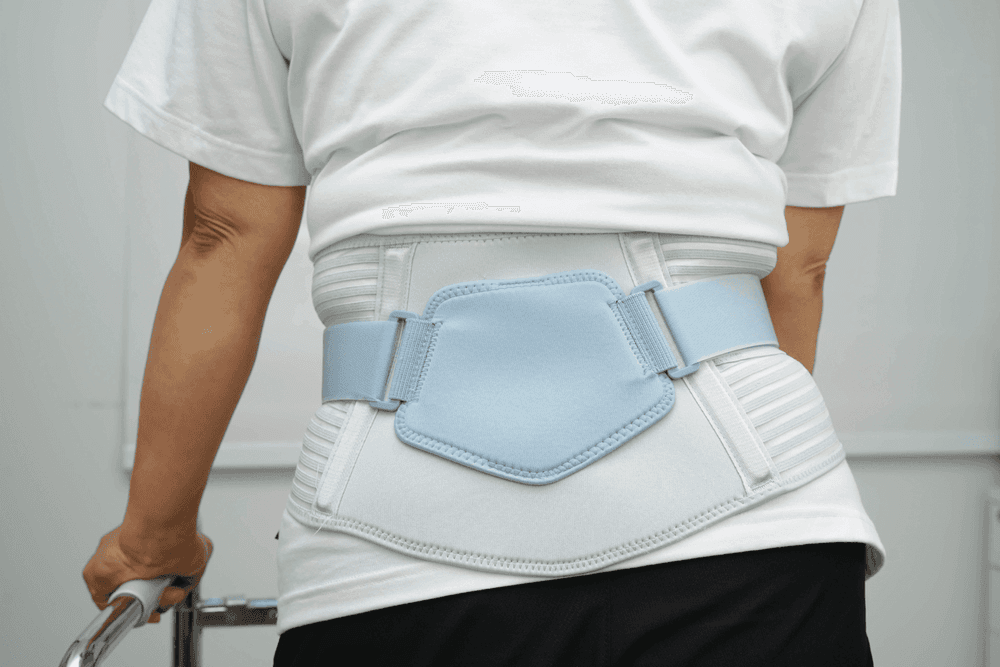
A lumbar support belt (sometimes called a back brace or back support) is a wide, wrap-around band worn around the lower part of your back. Most sit between your hips and your ribcage, right over the lumbar region of the spine (the natural inward curve just above the base of your back).
They work in a few different ways:
- Compression: Gentle, even pressure around the lower back can reduce inflammation and ease discomfort.
- Stabilisation: The belt limits excessive movement in the spine, which helps protect vulnerable areas during activity.
- Posture support: Wearing one acts as a physical reminder to keep your back straighter, which takes strain off muscles and discs.
You'll find a range of options on the market, from lightweight everyday supports made from breathable fabric, to firmer medical-grade braces with rigid panels. For most people managing everyday lower back discomfort, an adjustable lumbar support belt - one you can loosen or tighten throughout the day - is the most practical choice.

Lumbar support belt benefits - why wear one?
People use lumbar support belts for a whole range of reasons. That said, there are some common experiences that many people report:
- Improved posture awareness: The physical presence of the belt serves as a gentle nudge to sit and stand a little taller.
- Reduced strain on the lower back: This can be useful when doing activities that put extra demand on the spine.
- More confidence during movement: Some people find they're able to move around more freely when they feel supported, without the anxiety of catching their back
- Gentle, consistent compression: This can help calm acute pain and reduce the feeling of instability.
- Less fatigue during prolonged standing or sitting: This is helpful if your daily routine involves a lot of one or the other.
Who might benefit from a support belt?
They tend to be particularly useful for:
- Older adults managing age-related back changes.
- People who spend long periods standing.
- Anyone with occasional lower back strain from lifting or bending.
- Those recovering from a back injury (with professional guidance).
- People with conditions such as osteoarthritis, spondylosis or herniated discs (though always check with your doctor first).
Remember - a lumbar support belt is a helpful tool, not a cure. It's most effective when used as part of a wider approach that might include movement, gentle exercise and (where needed) physiotherapy. If your pain is severe, worsening or affecting your bladder or bowel, please see your GP straight away before reaching for a belt.
Is your chair or bed making your back worse? At Oak Tree Mobility, all of our chairs and adjustable beds are made to fit and designed specifically with spinal support in mind. Request a free brochure or call us free on 03300 524 625 to find out more.
When should you wear a lumbar support belt?
There are plenty of scenarios where a lumber support belt can be useful.
During activities that strain the lower back
This is the most common use, and for good reason. Tasks like housework, gardening, light lifting or standing at a kitchen worktop for a long time all involve sustained effort from your lower back muscles. Wearing a support belt can help take some of that load off, particularly on days when your back is already feeling sensitive.
It can be useful to wear one when vacuuming, mopping floors, weeding in the garden, standing at a market or event, or reaching into low cupboards.
During flare-ups of lower back pain
Most people with chronic back problems have good days and bad days. On a difficult day, a lumbar support belt can help you stay gently mobile rather than being confined to bed or the sofa. Staying carefully active (rather than resting completely) is usually recommended for most types of lower back pain.
For more on protecting your back day-to-day, take a look at our guide on how to prevent back pain in old age.
After injury or surgery (if advised by a professional)
In some cases, a GP, consultant or physiotherapist may recommend wearing a lumbar brace as part of recovery. This is most common after spinal surgery, a compression fracture or a significant muscle injury. If this applies to you, follow their specific guidance on when and how long to wear it - don't rely on general advice alone.
During rehabilitation or physiotherapy
Some physiotherapists recommend wearing a support belt during certain exercises in the early stages of rehabilitation, providing a degree of stability while your core muscles are being retrained.
While travelling or sitting for long periods
Long car journeys, train trips or flights are notorious for aggravating lower back pain. A lumbar support belt can be a helpful companion for travel, particularly if you don't always have control over the quality of the seat you're sitting in.
That said, the chair or bed you use at home has just as much impact on your back as any support you wear. If you find that sitting in your usual armchair makes your back worse, it may be worth considering a rise and recline chair, which can be adjusted to precisely the right position for your spine.
Our guide to the right position of a recliner chair for back support goes into more detail on this.
And when not to wear one:
Avoid wearing a lumbar support belt, or speak to your GP before using one, if any of the following apply:
- You have open wounds, skin irritation or a rash on your lower back. The compression and friction of a belt could aggravate broken or sensitive skin and risk infection.
- You have circulatory problems or poor sensation in the lower body. Conditions that affect blood flow or nerve sensation mean you may not feel if the belt is too tight or causing harm.
- Your pain is accompanied by any ‘red flag’ symptoms that need urgent medical attention.
- You've had recent spinal surgery and haven't been advised to wear one.
- You find yourself relying on it to manage pain that isn't improving after a few weeks.
None of this is meant to alarm. The vast majority of everyday lower back discomfort can be managed with a support belt. But back pain can sometimes be a symptom of something that needs proper diagnosis.
How to wear a lumbar support belt properly
Getting the fit right is everything. An incorrectly worn belt either does very little or, worse, causes discomfort or new problems.
Position the belt correctly
Place the belt so it sits centred on your lower back, covering the lumbar region, roughly from the top of your hips to just below the base of your ribcage. The back panel should sit flat against your spine, not bunched or twisted.
Adjust compression carefully
The belt should feel supportive and snug but you should still be able to breathe comfortably and take a full breath without restriction. If it feels tight or is digging in, loosen it. Adjustable lumbar support belts make this much easier to get right.
Wear over or under clothing
Either works. Under clothing keeps it discreet while over clothing makes it easier to adjust throughout the day. Choose whatever is most practical for you.
Avoid wearing too tightly
A common mistake is pulling the belt as tight as it will go, assuming firmer means better. It doesn't. Overly tight belts can restrict circulation and put pressure on your abdomen.
Follow manufacturer instructions
Every belt is slightly different. Read the guidance that comes with yours, and if in doubt, ask the retailer or your GP.

How to use a lumbar support belt safely
There's a right way and a wrong way to incorporate a belt into daily life.
- Wear it for specific activities, not all day. Most guidance suggests wearing a lumbar belt for 2–4 hours at a time during activities that demand it, rather than wearing it from morning to night.
- Avoid becoming dependent on it. Your back muscles are designed to support your spine. Wearing a belt constantly can reduce the work those muscles do, which over time can lead to weakness.
- Combine it with movement and gentle stretching. Walking, gentle yoga, swimming and targeted exercises (recommended by a physiotherapist) all help to maintain the strength and flexibility your back needs. A belt is a complement to these, not a replacement.
- Know when to take it off. Remove the belt if you notice it causing tingling, numbness, new pain or skin irritation. And always take it off before sleep.
- Listen to your body. If something doesn't feel right, it probably isn't. Persistent or worsening pain always warrants a conversation with your GP.
Choosing a lumbar support belt
With so many options available, it can be hard to know where to start. Here's what to look for:
- Size and fit: Most belts are sized by waist measurement. Measure before you buy. A belt that's too large won't provide adequate support and one that's too small will be uncomfortable.
- Adjustable support: An adjustable lumbar support belt lets you fine-tune compression throughout the day. This is particularly useful if your pain fluctuates, or if swelling tends to change across the day.
- Breathable material: Look for belts made from breathable, moisture-wicking fabric, especially if you plan to wear it during activity or in warmer weather. Mesh panels can help.
- Intended use: A light fabric belt works well for everyday support and travel. If you've been advised to wear one for recovery after injury or surgery, a firmer brace with rigid stays may be more appropriate.
Why support, fit and comfort matter at Oak Tree Mobility
There's something our mobility advisors see time and time again when they visit customers in their homes. A person has been living with back pain, and when you look at the chair they spend most of their day in, the problem becomes immediately obvious. The seat is too deep, so they're perched on the edge. The back doesn't reach their lumbar region. The armrests are the wrong height for getting up and sitting down safely. The chair itself might be perfectly well-made, but it doesn't fit them.
The same principle applies to lumbar support belts. A belt that sits too high misses the lumbar region entirely. One that's too loose provides no compression. The product is only as good as its fit to your body and needs.
That’s why every Oak Tree Mobility chair, adjustable bed and bath lift is made to fit. Our team takes the time to understand your posture, mobility, daily routine and challenges. Matching you with solutions that will make a real difference to your comfort and independence. It's why more than 60,000 people across the UK have trusted us since 2008.
Curious about how the right chair or bed could support your back? Request your free brochure or call us on 03300 524 625.
FAQs about lumbar support belts and the benefits of wearing one
How long should you wear a lumbar support belt?
For most people, wearing a belt for 2–4 hours during specific activities is a sensible approach. Avoid wearing it for extended periods throughout the day and always remove it for sleep. If your healthcare provider has given you specific guidance, follow that above general advice.
Can wearing a back support weaken muscles?
If worn too often and for too long, a back brace does reduce the amount of work your core and back muscles do, which can lead to weakening over time. The key is to use it purposefully for tasks that demand it, whilst continuing to move, stretch and strengthen your back through appropriate exercise.
Should you sleep wearing a lumbar support belt?
Sleep is a time when your body repairs and restores itself, and wearing a belt to bed isn't necessary or recommended for most people. If you're finding that back pain significantly disrupts your sleep, it's worth thinking about your sleeping position and the support your mattress and bed provide. Our guide to the best sleeping position for lower back pain has some practical tips, and our adjustable beds are designed with exactly this kind of support in mind.
Do lumbar support belts help posture?
The belt itself provides a physical prompt that makes you more aware of how you're holding yourself, which can help break habits of slouching or leaning. However, for lasting posture improvement, targeted exercises to strengthen your core and back muscles are usually the most effective long-term approach.
Can you wear a lumbar support belt while sitting?
Many people find wearing a lumber support belt helpful for long periods of sitting, particularly in chairs that don't offer good back support. That said, if you're spending a lot of time sitting, it's also worth thinking about the quality of the seating itself. A well-fitted rise and recline chair can provide consistent lumbar support throughout the day without the need for a belt.
Are adjustable lumbar support belts better?
An adjustable lumbar support provides the flexibility to increase or reduce compression depending on your activity and how your back is feeling that day. Fixed belts offer less versatility, which means they can end up either too loose to be useful or too tight to be comfortable.