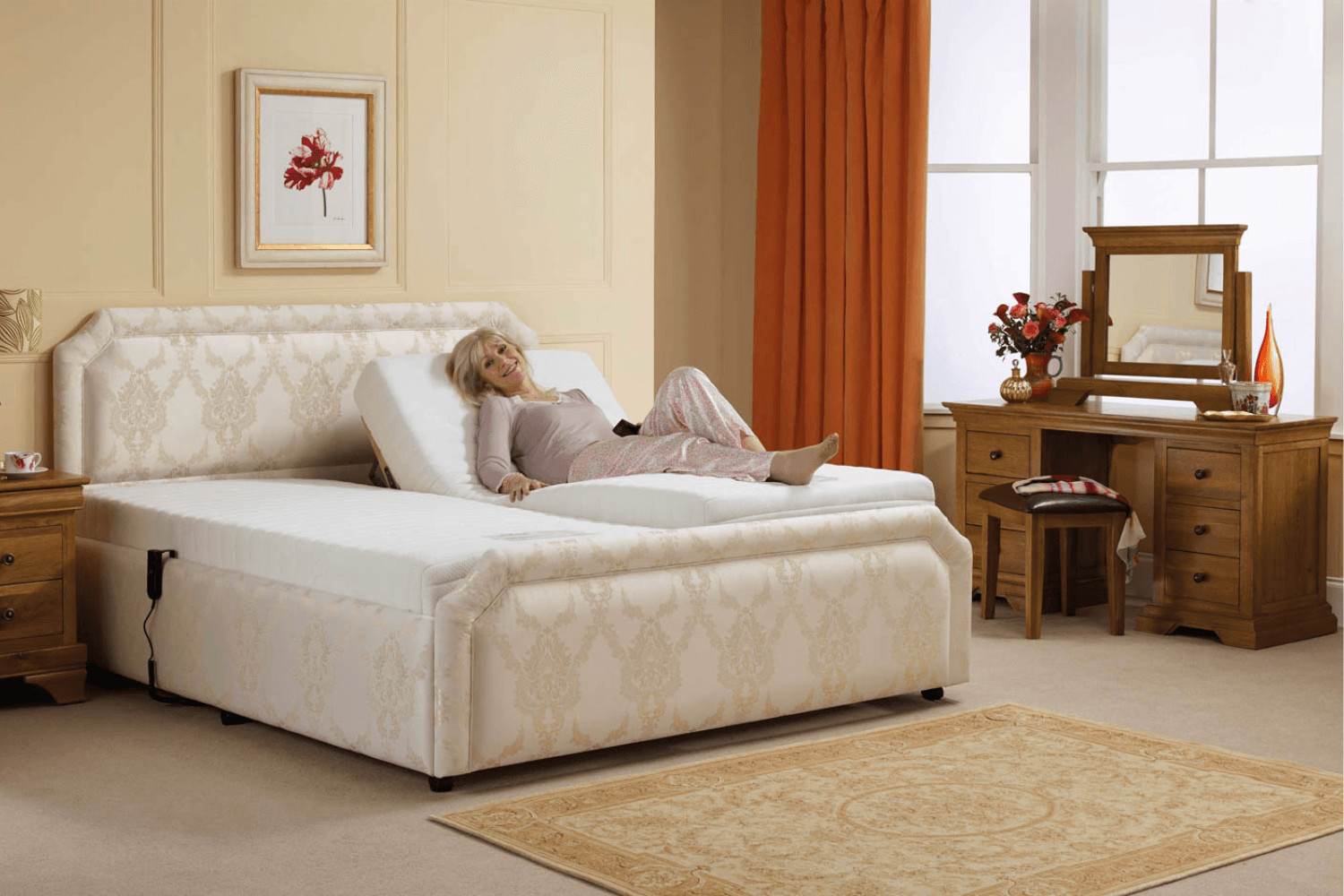



Adjustable Bed Advice
How to be comfortable sitting up in bed


Sitting up in bed should feel restful and easy, whether you’re reading the paper, watching TV, recovering from surgery or trying to get a better night’s sleep. But for many of us, as we get older it becomes uncomfortable surprisingly quickly. Aching backs and stiff necks are among the most common complaints.
The good news? With the right setup and support, sitting up in bed can be safe and comfortable. This guide explains the best positions, how to arrange pillows and when an adjustable bed may be the simplest long-term solution.
Key takeaways:
- The best way to sit up in bed is with good posture, proper pillow support and your head, back and legs aligned.
- Sitting too upright or without support can lead to back and neck pain.
- Changing position regularly helps keep muscles loose and reduces stiffness.
- If you sit up in bed often or suffer with pain, an adjustable bed offers the most comfortable and supportive upright position.

What's the best way to sit up in bed? Positions
A healthy sitting position in bed should keep your spine in a neutral, natural curve - not hunched, twisted or slumped.
The best position for most people:
- Sit at a 30–45° angle (slightly reclined rather than bolt upright).
- Keep your hips, shoulders and head in one line.
- Support your lower back with a small pillow or rolled towel.
- Place a pillow under your knees to reduce strain on the lower back.
This position helps reduce pressure on the spine, supports breathing and digestion and prevents you from sliding down the bed, which can get really uncomfy!
- Sit more upright but keep support behind your lower back.
- Keep your feet or knees slightly raised, which reduces the chance of slipping down.
- Avoid leaning forward by bringing the book, tray or tablet towards you instead.
How to comfortably sit up in bed: Our tips
Once you’ve found the right position, there are a few more steps you can take to make sure your time in bed is as comfortable and supportive as possible.
1. Arrange your pillows properly
Here’s how to arrange pillows for sitting up in bed:
- Use two firm pillows behind your back, placed vertically to support the spine.
- Add a smaller pillow or rolled-up towel behind your lower back for lumbar support.
- Use a pillow wedge if you need a more stable, upright position.
- Keep a pillow under your knees to relieve lower-back pressure.
2. Support your back and knees
Your lower back works hard when you're sitting in bed. Adding support helps your spine stay in a neutral shape.
Try:
- A lumbar roll
- A firm cushion
- A pillow wedge
- A folded blanket under the knees
This reduces strain across the hips and spine while improving circulation.
3. Support your head and neck
Your head should feel relaxed, not pushed forward or tilted.
You’ll know it’s right when:
- Your ears line up with your shoulders.
- Your chin is level (not tucked into your chest).
- You don’t feel pressure at the base of your neck.
If you wake with neck pain, try a slimmer pillow or a shaped orthopaedic one.
4. Shift position and move regularly
- Shift your weight every 20–30 minutes using small micro-movements like shoulder rolls, neck stretches or gentle torso twists.
- Move your feet and ankles regularly to improve blood flow.
- Practice deep breathing from your diaphragm for spine alignment and relaxation.
- Follow the 20–8–2 rule: 20 minutes sitting, 8 minutes standing, 2 minutes moving (if you can).
- Slightly elevate your knees to reduce pressure on hips and lower back.
These small movements help prevent stiffness and improve circulation.
5. Invest in an Adjustable Bed
For anyone who spends long periods in bed - whether due to age, mobility issues or recovery - an adjustable bed makes sitting up far easier.
Unlike pillows, which can flatten and move, an adjustable bed:
- Lifts your upper body smoothly at a touch of a button
- Supports your back evenly
- Raises the knees to prevent sliding
- Keeps your spine aligned
- Offers multiple positions for comfort
- Alleviates breathing and chest conditions
Some people find it life-changing!
“An adjustable bed will save your life. It's made my bedridden days bearable.” – Reddit user
If you’re finding it difficult to sit up, sleep upright or get comfortable, an adjustable bed can reduce pain and give you more independence.

How to sleep sitting up in bed comfortably?
Some people need to sleep upright due to back pain, sinus issues, COPD or post-surgery recovery.
To sleep sitting up:
- Recline to around 45° rather than sitting fully upright.
- Use a wedge pillow or adjustable bed for proper support.
- Keep your lower back cushioned.
- Support your knees so your lower back stays relaxed.
Sleeping bolt upright can strain the spine so a slight recline is safer and more comfortable.
Is sitting up in bed bad for you?
Sitting up in bed is fine if you have proper support. Many people experience pain not because of the position itself, but because they are:
- leaning forward
- sitting without low-back support
- using too many soft pillows
- sitting too upright
- staying still for too long
With better posture and the right setup, sitting up in bed can be comfortable and safe. Just make sure to shift position and do some gentle stretching at regular intervals to prevent stiffness or bed sores.
FAQs about sit up in bed support
Still have questions about finding the best way to sit up in bed? Hopefully our experts can help:
How to sit up in bed without hurting your back?
Use firm support behind your back, keep your knees raised and avoid slouching. A wedge pillow or adjustable bed helps maintain proper posture.
How to sit up in bed after a hip replacement?
After a hip replacement, sitting upright requires extra care:
- Keep your hip below 90° to protect your joint
- Maintain a neutral spine and avoid slouching or leaning forward
- Move in and out of bed safely by bending your knees, using your arms for support and pivoting instead of twisting
- A wedge pillow or adjustable bed can help maintain the correct angle without straining
How to stop sliding down the bed?
Sliding is common, but you can prevent it with a few adjustments:
- Elevate your knees slightly to anchor your position
- Lie on your back with knees bent, then move into a seated posture
- Opt for non-slip bedding or mattress toppers
- Adjustable beds allow smooth, gradual head elevation, reducing the risk of slipping compared to stacked pillows
How to help a person sit up in bed?
Raise the head of the bed (if adjustable), support their shoulders and use a slide sheet if needed. Try to avoid pulling from the arms.
What is the healthiest position to sit in bed?
A slight recline (30–45°) with knees supported and the spine aligned.
Why is sitting up in bed so uncomfortable?
Common causes of discomfort include:
- Weak core and upper back muscles
- Poor posture
- Too many soft pillows, which can tilt the spine
- Slippery bedding causing sliding
- Arthritis or spinal stiffness
- Lack of lumbar support
Who should avoid sitting upright?
Prolonged upright sitting isn’t suitable for everyone. Avoid it if you have:
- Recent abdominal or spinal surgery
- Severe osteoporosis or unstable fractures
- Significant postural instability or balance issues
Always talk to a physiotherapist or your doctor if you have mobility limitations.
With the right positioning, support and posture habits, sitting up in bed can be comfortable, safe and good for your spine.
If you’re older, post-surgery or have mobility challenges, an adjustable bed can make a world of difference, offering stable elevation, lumbar support and safer transitions in and out of bed.
If you have any more questions about making life more comfortable, or you want to find out if an adjustable bed is right for you can request a free brochure or speak to our team.
Sources and references
- How to correctly use an adjustable bed
- The advantages of adjustable beds for the elderly
- NHS bed exercises