Rise and Recline Chair Advice
What are the best chairs for the elderly?
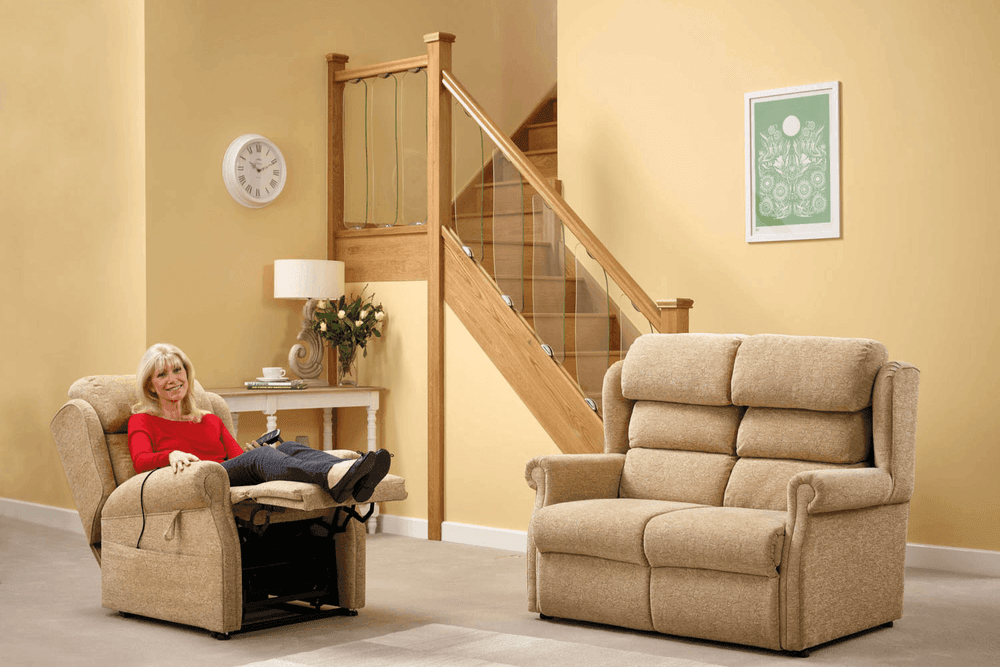
The best chairs for the elderly are usually rise and recline chairs: powered armchairs that help you stand, then recline to rest your back and legs. The right one fits your body, with feet flat, hips and knees at right angles, and arms you can push up from.
Key takeaways
- Seat height should let your hips and knees sit at right angles (90 degrees) with your feet flat on the floor.
- The seat should stop about 3 to 4 cm (around 1.5 inches) short of the back of your knees.
- Most riser recliners have weight limits starting from 19 stone (120 kg). Oak Tree chairs are made for people up to 50 stone (about 318 kg).
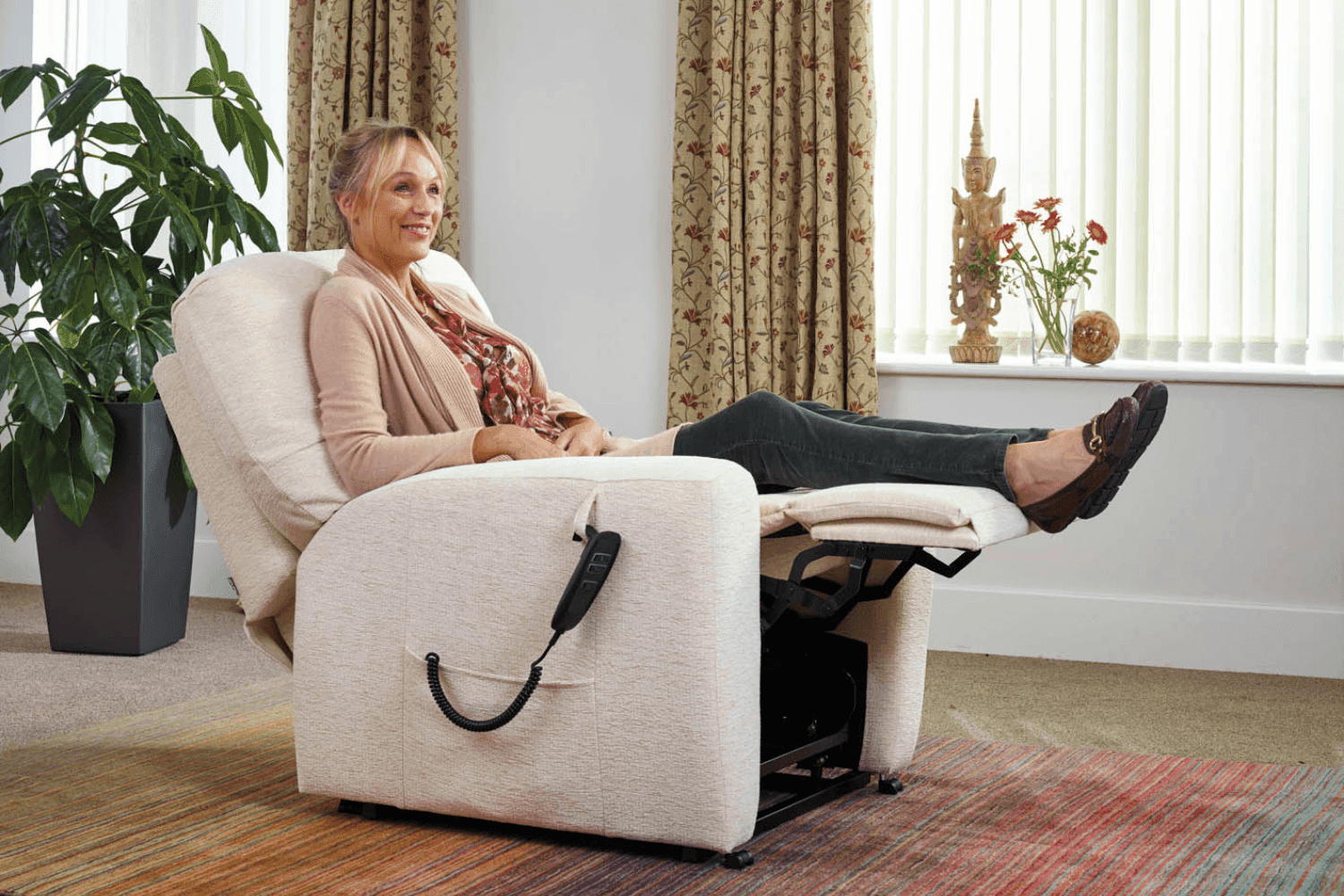
- A high leg lift motor raises your feet 6 inches above your hips, roughly in line with your heart.
- If you have a qualifying disability or long-term illness, a riser recliner can be bought without VAT, which is 20% at the standard rate. Age alone doesn't qualify.
- Around 4 in 10 customers who share their health needs with us have trouble getting up from a seat.
What is the best type of chair for an elderly person?
A rise and recline chair is the best type of chair for most older people because it helps with the two hardest moments: getting up and sitting down. The seat tilts forward and lifts you gently towards a standing position, so your knees, hips and arms do less work. Press the other button and it lowers you back down, then reclines.
That matters because low, soft sofas and armchairs get harder to use as strength and balance change. When customers tell us about their health, the most common needs we hear are trouble getting up from a seat (around 4 in 10), arthritis (more than 1 in 4) and back problems or sciatica (around 15%).
An NHS guide on choosing a chair notes that riser recliners can help people with severe mobility problems, and that powered models suit people with poor strength because manual ones can take effort to adjust.
A good rise and recline chair gives you:
- A powered rise to help you stand without pushing hard on your joints.
- Several recline positions for reading, watching TV or napping.
- A leg rest that lifts your feet, which helps if you get swollen ankles or sit for long periods.
- A simple handset with large buttons, so you can change position without leaning or pulling.
How does a rise and recline chair compare with other chairs?
A rise and recline chair is the only one of the common options that helps you stand up as well as recline. Here's how it compares.
| Chair type | Helps you stand? | Reclines and lifts legs? | Best for |
| Standard armchair | No. You rely on the arms and your own strength. | No | People who get up easily and don't need leg support |
| High seat or fireside chair | Partly. A higher, firmer seat makes standing easier. | No | People who stand fairly well but find low sofas hard |
| Manual recliner | No | Yes, by lever or push-back. This can take effort. | People with good hand and arm strength |
| Rise and recline chair | Yes, powered | Yes, powered, by handset | People who find standing, sitting or changing position difficult |
What size chair does an older person need?
An older person needs a chair where the seat height matches the distance from the floor to the crease behind their knee, so their hips and knees sit at right angles with feet flat. A chair that's the wrong size causes most comfort problems.
A seat that's too low is hard to get out of and puts uneven pressure on your bottom, which raises the risk of soreness and pressure sores. A seat that's too deep makes you slide forward, which can drag on the skin. Too wide, and you can't use both arms to push yourself up.
These are the measurements to check, with the typical ranges for adults:
| Measurement | How to measure | What a good fit looks like | Typical range |
| Seat height | Floor to top of the seat cushion | Feet flat on the floor, hips and knees at 90 degrees | 17 to 20 in (43 to 50 cm) |
| Seat depth | Backrest to the front edge of the seat | Two fingers' gap between the seat edge and the back of your knee | 18 to 22 in (45 to 55 cm) |
| Seat width | Between the inner sides of the armrests | About 20 mm (three-quarters of an inch) between each hip and armrest | 18 to 22 in (45 to 55 cm) |
| Armrest height | Floor to the top of the armrest | Forearms rest naturally without lifting your shoulders | 22 to 25 in (55 to 63 cm) |
| Backrest height | Rear of the seat cushion to the top of the backrest | Supports your head when you sit right back | 28 to 32 in (70 to 80 cm) |
| Weight capacity | Check the maker's limit | Comfortably above your weight | From 19 stone (120 kg) on most riser recliners; up to 50 stone (about 318 kg) on Oak Tree chairs |
Measure in everyday clothes, not a thick coat. Measure your doorways and the space in front of the chair as well, because a recliner needs room to lie back and lift the leg rest. Our guide on how to measure for a rise and recliner chair walks through each step.
Off-the-shelf chairs come in a few set sizes, so most people end up compromising on at least one of these measurements. Oak Tree chairs are made to your measurements after a home consultation, so the seat height, depth and width are set for you.
Which rise and recline motor should you choose?
Choose a dual motor if you want to raise your legs while keeping your back upright, and a high leg lift if your main aim is better circulation and less pressure on your joints. The motor decides how the back and leg rest move, so it's worth getting right.
| Oak Tree motor | How it moves | Leg height | Good for |
| Dual Motor | Back and footrest move separately. The back drops almost flat. | Standard footrest | Sitting upright with your feet up, or lying back to nap |
| High Leg Lift | Back and footrest move together (tilt in space), with a natural knee bend | Feet 6 inches above your hips | Swollen legs and ankles, circulation, taking pressure off hips and knees |
| High Leg Lift PLUS (most popular) | Tilt in space, plus an extra motor so the backrest also moves on its own | Feet 6 inches above your hips | Everything the High Leg Lift does, with more control over your back position |
For more detail, read about our rise and recliner chair motors and the 5 benefits of a high leg lift rise and recline chair.
Can a rise and recline chair help with health problems?
A rise and recline chair can make everyday life easier if you live with arthritis, back pain, swollen legs or a condition that affects your balance or strength. It won't treat a condition, but it can take strain off your body when you sit, rest and stand.
- Joint pain and arthritis: the powered rise means less pushing through sore knees, hips and wrists. Read more: help osteoarthritis with a rise and recline chair.
- Swollen legs and ankles (oedema): a high leg lift raises your feet 6 inches above your hips, roughly level with your heart, to help ease swelling.
- Back pain: a supportive back, lumbar padding and the option to change position through the day all help. See: the best reclining position for back pain relief.
- Recovery after hip or knee replacement: a seat at the right height and a powered rise mean less effort and less strain each time you stand. Here’s how recliners help after a hip replacement.
- Pressure sores: a seat that fits and lets you shift position spreads your weight more evenly. How to choose a pressure relief cushion.
Oak Tree customers include people living with Parkinson's, multiple sclerosis, COPD, osteoporosis, heart disease and those recovering from a stroke. If you have a health condition, talk to your GP or an occupational therapist about which features suit you. Our article on whether a rise and recline chair can help your health goes into more detail.
Around 1 in 4 customers who share their health needs with us live with more than one condition, so it’s worth choosing a chair that meets more than one need (as of October 2026).

Are rise and recline chairs safe for older people?
Rise and recline chairs are safe for older people when the chair fits and the person can work the controls on their own. A hospice guide on choosing an armchair says the person using the chair must be able to operate it safely so they don't get stuck or risk falling out.
Before you buy, check that:
- You can read and press the handset buttons easily, even on a bad day for your hands.
- Your feet reach the floor when the chair is fully lowered.
- The chair doesn't tip you so far forward that you feel unsteady.
- There's room for the chair to recline fully without hitting a wall or furniture.
- The weight limit is well above your weight.
Trying a chair at home, in your own room, is the best way to check all of this. If you're unsure, an occupational therapist can assess what you need.

Do recliner chairs help with sleep?
A recliner chair can help you rest and nap more comfortably, especially if lying flat in bed is uncomfortable because of breathing, back pain or swollen legs. Sleep expert Dr Nerina Ramlakhan explains how a supportive chair helps you find a good napping posture in the benefits of taking a nap.
If you're thinking about sleeping in your chair overnight, read is it safe to sleep in a chair? first, and speak to your GP if you can't sleep lying down.
How much does a chair for an elderly person cost?
The cost of a rise and recline chair depends on the motor, size, fabric or leather, back style and accessories you choose. Oak Tree chairs are made to measure, so you get a quote after a free home consultation rather than a fixed shelf price.
With Oak Tree, the price of a single chair includes:
- White glove delivery and installation by a two-person team.
- A walk-through of your chair so you're confident using it.
- Removal of your old chair, which is donated to the British Heart Foundation.
- A free guarantee: 25 years on the frame, 5 years on the mechanism and motor, 2 years on the electronics and charger, and 1 year on fabrics, leathers and other upholstered materials (terms apply).
You can also bring the cost down with the £200 trade-in offer (correct as of October 2026), finance, and VAT relief if you're eligible. Ordering a chair and a settee together also lowers the delivery and installation cost. See the chair price guide for more.
Can you buy a rise and recline chair without paying VAT?
You can buy a rise and recline chair without paying VAT if you have a disability or long-term illness and the chair is for your own personal or domestic use. HMRC's VAT Notice 701/7 includes riser recliner chairs (also called lift and tilt chairs) as goods that can be zero-rated. The standard VAT rate is 20% (October 2026), so that's the saving on the chair price.
- Who qualifies: people with a physical or mental impairment that affects everyday activities, or a long-term or terminal illness.
- Who doesn't: HMRC says relief doesn't cover an elderly person who isn't disabled or chronically sick.
- What you need: a signed written declaration. A family member, guardian or doctor can sign it for you if you can't.
- Which chairs: the chair must have a lift or tilt function. Recliners that only recline don't qualify.
Oak Tree's mobility advisers can help you fill in the declaration. Check your VAT exemption eligibility.
Explore Oak Tree rise and recline chairs
Oak Tree rise and recline chairs are handmade in Great Britain and built to your measurements.
You can choose from:
- Eight chair styles, from the best-selling Oak with its waterfall back to the swivel Serenity and the Parker Knoll Ashton and Kingswood.
- Three motors: Dual Motor, High Leg Lift and High Leg Lift PLUS.
- Over 500 fabrics and leathers.
- Accessories including heat and massage, a neck roll, lateral back support, arm caps and lockable castors.
- Weight capacity up to 50 stone (about 318 kg).
Book a free home consultation to try a chair in your own living room, or request a free brochure. Explore our rise and recline chairs.

Frequently asked questions about recliners chairs for the elderly
What seat height is best for an elderly person?
The best seat height is the distance from the floor to the crease behind your knee, so your feet rest flat and your hips and knees sit at right angles. For most adults this falls between 17 and 20 inches (43 to 50 cm). A slightly higher seat makes standing easier.
How much weight can a rise and recline chair hold?
Most riser recliners have weight limits starting from about 19 stone (120 kg). Oak Tree chairs are made for people up to 50 stone (about 318 kg). Always choose a chair with a limit comfortably above your weight.
Is a single or dual motor rise and recline chair better?
A dual motor chair is better if you want to lift your legs while keeping your back upright, because the back and footrest move separately. A single motor moves both together, which is simpler to use. Oak Tree's High Leg Lift PLUS combines a tilt in space movement with an independent backrest. Here’s why putting your feet up is a good idea.
Can you sleep in a rise and recline chair?
You can nap comfortably in a rise and recline chair, and some people find it easier than lying flat. If you find you need to sleep in your chair every night, talk to your GP. Read is it safe to sleep in a chair?
Do I have to pay VAT on a rise and recline chair?
You don't pay VAT on a rise and recline chair if you have a disability or long-term illness and sign an eligibility declaration. Being older isn't enough on its own. The chair must have a lift or tilt function to qualify.
Can I try a rise and recline chair before I buy?
Yes. Oak Tree offers a free home consultation where you can try a chair in your own home and have your measurements taken, so the chair is made to fit you.
What happens to my old chair?
When Oak Tree delivers your new chair, the team takes your old chair or bed away and donates it to the British Heart Foundation. You may also be able to get £200 off through the trade-in offer.
Does your chair come with a warranty?
Yes, every chair comes with a comprehensive warranty. Each element of your purchase will have varying years of coverage, outlined below.
| Parts | Guarantee Period |
| Chair Frame | 25 years |
| Chair and Bed Mechanism (sometimes called the Action) | 5 years |
| Actuator (sometimes called the Motor) | 5 years |
| Electronic Components and Charger | 5 years |
| Fabrics, Leathers, Foams and all other upholstered materials such as arm covers | 1 year |